

Quick Answers




Which type of process can the machining be?
- July 21, 2025
- Jason Chang
- 1:01 am
When it comes to manufacturing, machining is a crucial process that involves shaping materials into desired shapes and sizes.
There are various types of machining processes, each suitable for different materials and applications.
In this article, we will explore the different types of machining processes and their applications in the engineering industry.
1. Turning
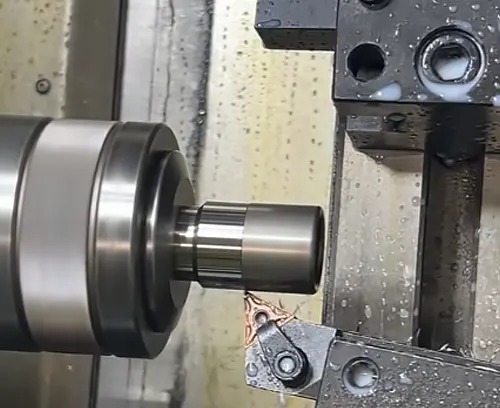
Turning is a machining process that involves rotating a workpiece on a lathe while a cutting tool removes material from the surface.
This process is commonly used for cylindrical parts such as shafts, rods, and discs.
Turning is ideal for creating precise cylindrical shapes with tight tolerances.
2. Milling
Milling is a versatile machining process that involves using a rotating cutting tool to remove material from a workpiece.
The cutting tool can move along multiple axes to create complex shapes and features.
Milling is commonly used for creating slots, pockets, and contours on a workpiece.
3. Drilling
The machining is a machining process that involves creating holes in a workpiece using a rotating cutting tool.
Drilling is essential for various engineering applications, such as creating holes for fasteners or creating precise holes with tight tolerances.
There are various types of drills available, including twist drills, counterbores, and countersinks.
4. Grinding
The machining is a precision machining process that involves removing material from a workpiece using an abrasive wheel.
Grinding is ideal for creating smooth surface finishes and precise dimensions.
This process is commonly used for finishing operations to achieve tight tolerances and high accuracy.
5. Broaching
Broaching is a machining process that involves using a specialized tool called a broach to remove material from a workpiece.
This machining is ideal for creating complex internal shapes and contours, such as keyways and splines.
This process is commonly used for producing gears, pulleys, and other components with internal features.
6. Honing
The machining is a precision machining process that involves removing material from a workpiece using abrasive stones.
Honing is ideal for achieving precise surface finishes and tight tolerances.
This process is commonly used for finishing operations on parts that require high precision and accuracy.
7. Lapping
Lapping is a precision machining process that involves rubbing two surfaces together with a fine abrasive paste.
It is ideal for creating extremely smooth surface finishes and achieving tight tolerances.
This process is commonly used for finishing operations on parts that require superior flatness and surface finish.
8. Electrical Discharge Machining (EDM)
EDM is a non-traditional machining process that involves using electrical discharges to remove material from a workpiece.
EDM is ideal for creating intricate shapes and features that are difficult to machine using conventional methods.
This process is commonly used for producing dies, molds, and aerospace components.
9. Waterjet Cutting
Waterjet cutting is a non-traditional machining process that involves using a high-pressure jet of water mixed with abrasive particles to cut through materials.
The cutting is ideal for cutting a wide range of materials, including metal, plastic, and composites.
This process is commonly used for creating complex shapes and contours with minimal heat-affected zones.
Conclusion
Machining processes play a crucial role in the manufacturing industry, allowing engineers to create precise parts with tight tolerances and high accuracy.
By understanding the different types of machining processes and their applications, engineers can select the most suitable method for their specific needs.
Whether it’s turning, milling, drilling, or grinding, each machining process offers unique advantages and capabilities that can help engineers achieve their desired outcomes.
By leveraging the right machining process, engineers can produce high-quality parts that meet the requirements of their customers and industries.